
Adur and Worthing Council have recently introduced their brand new weekly food waste collection scheme as part of the government’s Simpler Recycling scheme. Food currently accounts for one-third of all general waste found in local refuse bins. Within its first week of operation the new service collected 72.3 tonnes of food waste.
How does the new service work?
The new system makes food recycling straightforward for local residents:
Kitchen caddy: Residents empty leftover food waste directly into their new indoor caddy.
Outside Bin: Once full, caddy contents are transferred into an orange-lidded outside food waste bin for weekly pickup.
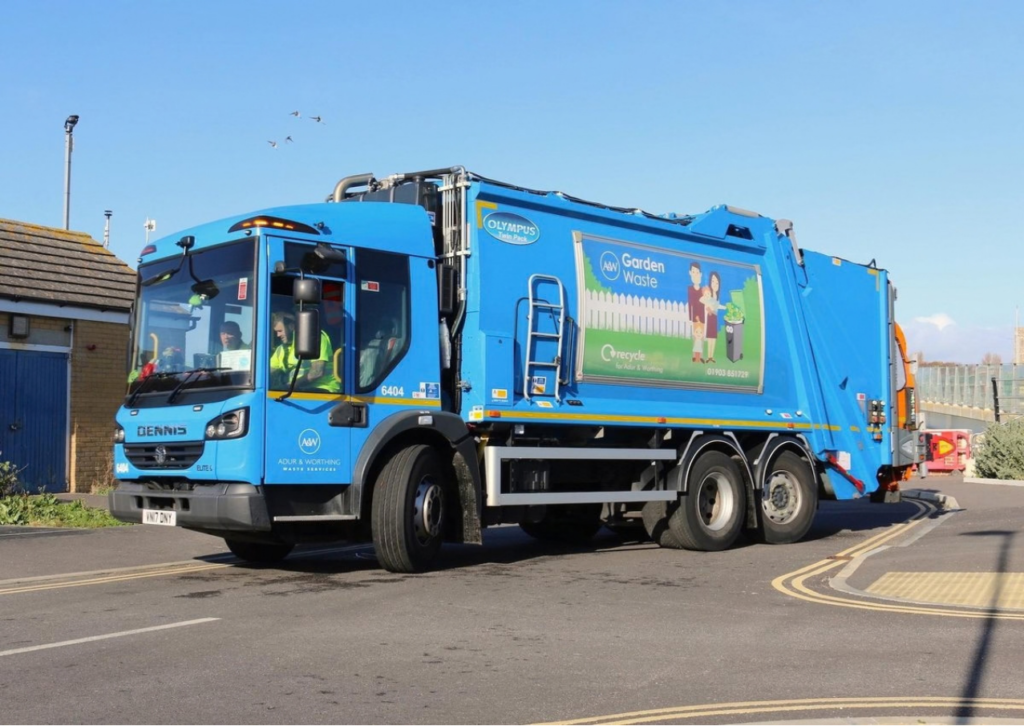
Collection: Newly recruited staff use specialist smaller collection vehicles to gather the waste from thousands of homes within the Worthing and Adur area.
What can I put in my food waste bin?
Accepted Items: Cooked and uncooked leftovers, meat and bones, fish and shellfish, dairy, fruit and vegetable peelings, bread, pastries, rice, pasta, tea bags, coffee grounds, eggshells, solid fats, and pet food.
Prohibited Items: Packaging, liquids or oils, pet waste or bedding, flowers, non-food materials, and plastic bags.
Lining Your Caddy: Use only compostable liners, newspaper or kitchen roll. Plastic bags are strictly prohibited as they break down into microplastics that can contaminate the recycled material.
What happens to the food waste?
Food waste is transported to a processing facility near Horsham, operated on behalf of West Sussex County Council. There, it undergoes anaerobic digestion, which is the process of converting organic waste into two valuable resources:
Biofertiliser: Supplied directly to local farmers for use on their agricultural fields.
Renewable Energy: Powers the processing plant itself, with surplus electricity exported to the national grid to supply power for local homes.
For food waste, recycling offers a far more sustainable alternative to landfill. In landfill sites, decomposing food releases methane, a powerful greenhouse gas that contributes significantly to climate change.
Rollout Phases and Missed Bins
The rollout across Adur and Worthing is taking place in two phases. At the time of writing this blog the first phase has already commenced, with residents in phase two being contacted at a later time regarding their collections start date.
You can check when your bin day is on the Adur and Worthing Council website.
What can I do to make a difference?
Reducing food waste starts with a few simple habits: plan your meals, stick to a shopping list, freeze leftovers, and regularly check use-by dates. Together, these small changes can save an average family of four up to £80 a month.
For more useful recycling tips, you can explore our other blogs.